
Contact us about your next project, call 01242 227 910 or email info@citrus-seating.co.uk
Open-plan layouts promised collaboration, but they also brought constant noise, a shortage of private space, and overbooked meeting rooms. Office pods solve these problems without months of disruptive construction. This guide covers everything you need to know – from acoustic performance and design features to installation, costs, and choosing the right pod for your team.
Office pods are stand-alone units for private workspaces, placed inside existing office spaces as free standing, modular enclosures. They range from compact one-person phone booths to larger pods that seat six to eight people for presentations and collaborative sessions.
They deliver quiet space for focused work, private phone calls, and meetings – all without permanent partitions or disruptive building work. Modern office pods often feature acoustic insulation, integrated technology, and ergonomic furniture, making them genuinely usable spaces rather than glorified dividers.
Citrus Seating designs and manufactures a full range of office pods and booths in the UK, including breakout booths, acoustic meeting rooms, and teamwork pods. These can be installed quickly and relocated if the office layout changes or the business moves premises. Office pods enhance flexibility and space efficiency in workplace layouts.
Key benefits at a glance:
- Noise reduction – reduce noise from busy environments so conversations stay contained
- Privacy – office pods provide private, soundproofed environments for individuals or small groups
- Flexibility – move, reconfigure, or expand without construction
- Space efficiency – replace under-used boardrooms with right-sized pods
- Hybrid meeting support – office pods support hybrid and agile working by offering private spaces for virtual meetings
Each of these is explored in detail below.
Citrus Seating offers many pods in various sizes and styles, so offices can mix and match instead of relying on one generic meeting room type.
Solo work pods and phone booths are compact units for one person. Phone booths ensure privacy for confidential calls, while work pods are designed for focused work and concentrated work in open offices. They’re ideal near sales teams or customer-facing desks where private conversations happen frequently.
Small meeting pods (2–4 people) suit quick one-to-ones, interviews, and project catch-ups. They facilitate private calls and confidential meetings without needing large meeting rooms, and they’re a cost effective way to add capacity that a single boardroom can’t provide.
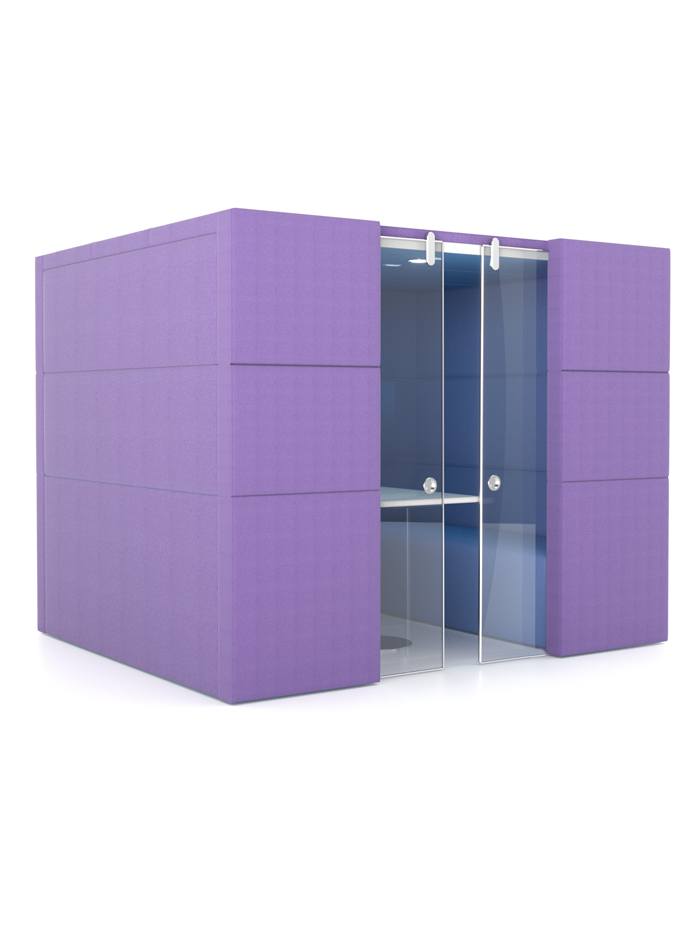
Medium and larger pods (4–8+ people) function as enclosed office meeting pods for presentations, client meetings, longer meetings, and hybrid sessions where multiple people join remotely. Meeting pods accommodate both small and large team gatherings depending on configuration.
Open-fronted booths and high-back seating pods work well for informal office meeting sessions, breakout areas, and agile teamwork where visual connection to the wider office is still desirable. Office booths provide privacy without construction, making them quick additions to open spaces.
Specialist options are increasingly popular too: acoustic pods configured as focus rooms, collaboration zones, or library-style spaces for quiet concentration.
Since around 2015, the shift towards open plan offices, hot-desking, and hybrid work has accelerated sharply. The result? More people sharing fewer desks, and far fewer enclosed spaces to retreat to. Research shows that 63% of employees lack quiet space in offices, and 37% of open-plan office workers report decreased productivity due to noise and interruptions.
Common pain points are familiar to most businesses:
- Meeting rooms permanently overbooked for two-person catch-ups
- No suitable space for confidential calls or sensitive HR conversations
- High cost and long timescales for traditional fit outs involving fixed construction
- Disruption to the wider team during building work
Office pods offer a perfect solution to these challenges. Unlike permanent meeting rooms, they require no planning permission in most cases, have shorter lead times, and involve no structural changes. Pods act as rooms within rooms – they can be moved, resized, or reconfigured as teams grow or department layouts shift.
Consider replacing one 20-seat boardroom (used at full capacity perhaps once a month) with several smaller meeting pods and solo booths. The result is space that actually matches real usage patterns. According to market research, the global office pod market is growing at roughly 10–11% annually, confirming that many organisations now treat pods as a core part of workspace strategy rather than optional extras.
All Citrus Seating pods are designed and manufactured in-house in the UK, giving close control over quality, materials, finishes, and acoustic performance. This in-house capability means pods can be built to exact specifications, whether you need a single pod or a coordinated scheme across multiple floors.
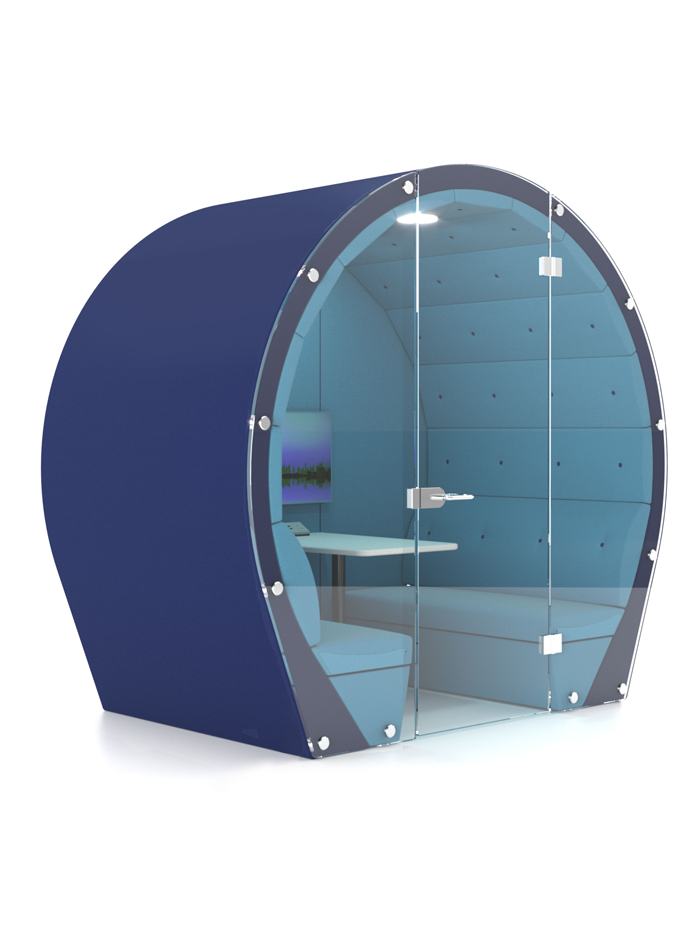
Ocean Circular Office Pod – a circular meeting pod with curved upholstered walls, integrated comfortable seating, and a central table. Its soft, enclosed form makes it an appealing meeting space within busy offices, well-suited to creative discussions and informal collaboration.
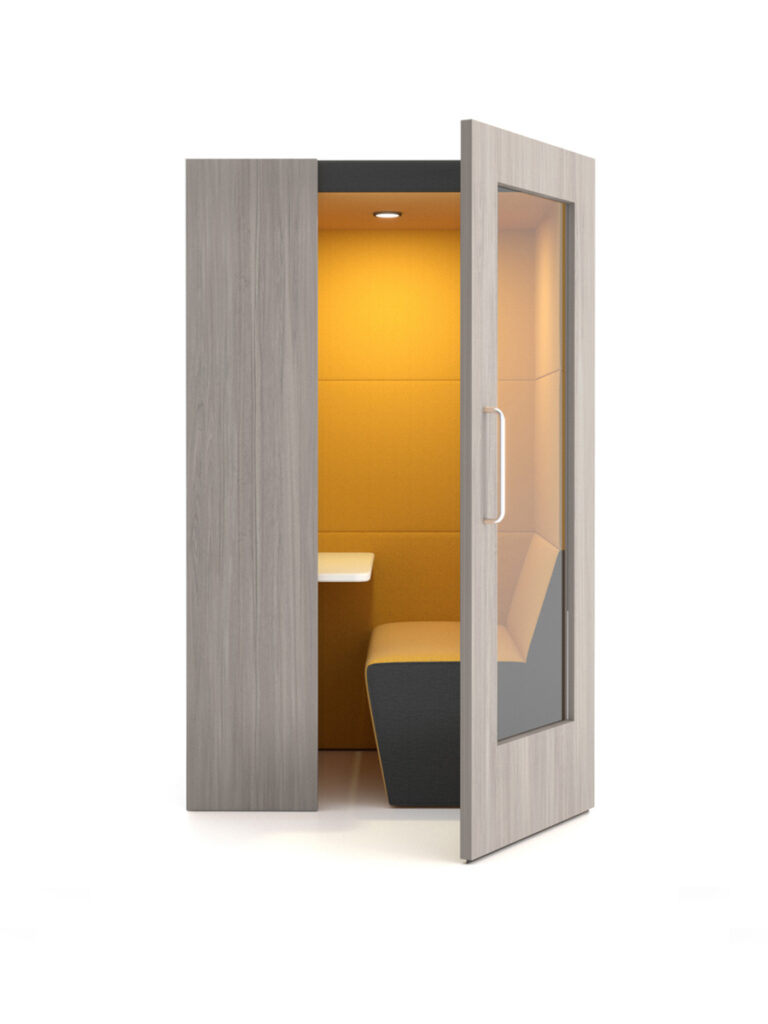
Shelton Office Pod – an angular pod with high upholstered sides, integrated bench seating, and a table. It seats around four people comfortably and works well for office meeting sessions, interviews, or team huddles that need some separation from the main floor.
The broader Citrus Seating range includes breakout booths, study booths, and acoustic teamwork pods. All can be tailored in fabric colours, textures, and internal layouts. Whether you need a handful of pods for one floor or many pods rolled out across an entire building, the design team can create a consistent look and feel that fits your brand.
Good acoustics are essential for office pods to provide speech privacy and minimise noise. Without proper sound insulation, a pod is little more than a box – conversations leak out, external noise leaks in, and the whole point is defeated.
Citrus Seating pods use high-backed and full-height upholstered panels, sound-absorbing foams, and soft internal finishes to limit reverberation. The goal is acoustic privacy: making conversations inside the pod difficult to overhear from outside, while keeping internal sound comfortable rather than echoey. Background noise inside well-designed pods typically stays within comfortable ranges, and reverberation times remain low enough for clear speech during video calls and hybrid calls.
The difference between properly enclosed acoustic pods and simple screens is substantial. In laboratory tests aligned with ISO 23351-1:2020, fully enclosed booths achieved speech level reductions of around 27–30 dB, compared to just 3–5 dB for open workstations. Many office pods meet ISO 23351-1:2020 standards, and buyers should ask for independently tested data rather than relying on marketing claims alone.
Pods significantly reduce external noise in busy workspaces. Acoustic pods provide private space for calls and meetings, and they help create quieter spaces for focused work. Imagine placing a pod near a busy circulation route and still being able to hold confidential calls or sensitive HR meetings inside – that’s what engineered sound absorption and proper sealing deliver. Pods improve privacy and reduce distractions in open offices, making them a measurable boost to productivity.
Pod projects typically start with a simple question: where are the pain points? Identifying noisy zones, a shortage of meeting rooms, or a lack of quiet focus areas helps map where pods will add the most value.
Zoning matters. Place office meeting pods near the teams that use them most. Position phone booths close to sales or customer service areas where employees regularly make private phone calls. Keep quiet focus pods away from high-traffic corridors and circulation paths. Pods should enhance both collaborative areas and quiet spaces in a balanced office design.
Blending enclosed pods with open breakout furniture creates a layered workspace with different noise levels and degrees of privacy. Not every interaction needs a fully soundproof room – sometimes a high-back booth in an open space is enough.
Safety and access are non-negotiable. Ensure clear routes around pods, alignment with fire safety guidance, and access to natural light where possible. Pods help boost employee well-being by providing quiet spaces for breaks and recovery from the constant stimulus of busy offices.
A typical floor re-plan might replace a bank of fixed desks with two two-person booths, a four-person meeting pod, and a quiet study zone – creating variety without reducing overall capacity. Engaging the Citrus Seating expert team early for space planning advice, 2D/3D layouts, and realistic pod counts based on your team size and meeting patterns makes the whole process smoother.
Step inside a well-specified Citrus Seating pod and you’ll find a workspace that feels considered, not cramped. Ergonomic seating and integrated tables or work surfaces are designed for laptops, note-taking, and collaborative work. Models like the Ocean and Shelton include built-in seating and surfaces that make the pod immediately usable without additional furniture.
Office pods require adequate electrical outlets and USB charging points for technology integration. Most models come equipped with power and USB sockets, and data points can be added where needed. Meeting pods can include provisions for screens and collaborative tools, supporting video conferencing and hybrid calls without trailing cables.
Ventilation and airflow are critical for enclosed office spaces to maintain comfort. Citrus Seating pods feature ventilation systems with quiet fans or air grilles that prevent stuffiness during longer meetings, alongside integrated lighting – typically LED task and ambient lighting that keeps interiors bright without glare. Office pods are often equipped with ventilation, lighting, and power as standard.
Customisation runs deep. Citrus Seating offers a full range of fabrics, vinyls, and finishes so pods can match brand palettes or existing office schemes. Premium pods with bespoke colourways and features involve longer lead times, while standard configurations ship faster – giving businesses flexibility depending on budget and timeline. The pods are also low maintenance, with durable surfaces designed for everyday commercial use.
Installing office pods is significantly quicker and less disruptive than traditional building work. Installation does not require construction or extended downtime, and installation of office pods typically takes a few hours per unit rather than weeks of site work.
Lead times depend on specification. Some office pods can be delivered within 7–14 working days for standard configurations, while some office pods can be delivered and installed within 4 to 8 weeks for bespoke colourways or more complex builds. Delivery and installation costs are quoted separately, so you’ll have clear visibility on the total price depending on your project scope.
The typical process runs as follows:
- Survey – site measurements and access assessment
- Manufacture – pods built to specification in the UK
- Delivery – component parts transported to site
- Assembly – pod frames, panels, electrics, and ventilation fitted on-site
- Final checks – lighting, power, and acoustics verified
Logistics considerations include access routes, lifts, and door widths. Pods arrive as component parts that can be handled within normal office buildings without specialist equipment.
Office pods can be installed without planning permission, and they’re typically classified as furniture rather than permanent structures. This means compliance with building regulations is simpler, though fire safety guidance and landlord approval should still be confirmed. Critically, pods are relocatable – they can be dismantled and moved to a new floor or new premises, protecting your investment across multiple fit-out cycles. Pods can be relocated easily as workspace needs change.
When you compare office pods cost against traditional meeting room construction, the numbers often favour pods – especially when you factor in speed, flexibility, and dilapidation risk.
Capital expenditure: Small office pods start from around £3,500, while extra-large meeting pods can reach £40,000 or more for fully equipped configurations. Pods can also be rented starting from £220 per month. Compare that to the full cost of constructing a permanent room – architect fees, building work, M&E services, and weeks of disruption. Office pods are a cost effective and sustainable alternative for most businesses.
Adaptability: Pods can be reconfigured, expanded, or replaced over the life of a lease. Traditional meeting rooms are demolished and rebuilt when needs change – expensive and wasteful. Office pods sustainable credentials also improve when you consider that they avoid the material waste of repeated fixed construction cycles.
Acoustic performance: Well-designed acoustic pods can match or exceed many basic meeting rooms, particularly in buildings with poor existing sound insulation. A properly sealed pod with engineered absorption will outperform a plasterboard room with no acoustic treatment.
Practical advantages: Pods are ideal for creating extra meeting or call capacity in fully occupied buildings where adding more formal rooms is impossible.
Traditional built rooms still make sense for very large boardrooms or highly serviced spaces. But for the majority of everyday meetings, video calls, and concentrated work, pods and booths are faster, more flexible, and often deliver better acoustic privacy.
Choosing the right pod starts with understanding how your team actually works, not how you think they should work.
Assess real usage: How often do meetings happen? What’s the typical group size? How many employees take video calls daily? Is there demand for quiet, individual focused work zones? Answering these questions prevents over-specification.
Sizing advice:
- If most meetings involve two or three people, prioritise small meeting pods over large boardroom-style enclosures
- Balance solo pods for private conversations and confidential calls with medium pods for team discussions
- Consider open booths for informal catch-ups that don’t need full acoustic enclosure
Check that every pod has adequate power, data, integrated lighting, and ventilation systems to support laptops, dual screens, and extended video conferencing sessions. A pod without power is a cupboard.
Think ahead. Hybrid working patterns will continue to shift. Growth, restructuring, and possible relocation all mean the pods you buy today should be repurposable rather than disposable. Most models from Citrus Seating are designed for exactly this – modular, relocatable, and adaptable to changing workspace demands.
Office pods improve workplace productivity by addressing noise and distraction issues directly. They’re the perfect solution for businesses that need to create flexible, high-quality office spaces without the cost, disruption, and inflexibility of traditional fit outs.
If you’re unsure where to start, Citrus Seating’s team can review floor plans, discuss budgets, and recommend a combination of pods tailored to your workplace strategy.
Office pods are a practical, low-disruption way to upgrade offices for focused work, meetings, and hybrid collaboration. Whether you need a single phone booth or a complete scheme of pods across multiple floors, the process with Citrus Seating follows a clear path:
- Initial conversation – discuss your needs, pain points, and budget
- Design proposals – 2D/3D visuals based on your floor plans
- Quotation – clear pricing with delivery and installation itemised
- Manufacture – built to specification in the UK
- Installation – assembled on-site with minimal disruption
Citrus Seating can create pods to suit existing furniture, finishes, and corporate branding, or design completely new pod schemes for refurbishments and new builds. If you’re uncertain about demand, consider a pilot installation – start with one meeting pod and one phone pod, test usage, then roll out more widely.
Contact Citrus Seating on 01242 227 910 for advice, fabric samples, and up-to-date lead times. The expert team works as collaborative partners throughout the whole process, not just product suppliers.
Workplace needs will keep evolving. Flexible acoustic pods help offices stay adaptable well into the 2030s – giving your team the right space, at the right time, without the permanent commitment of fixed construction.